Tboureda: Experiencing Morocco’s Thunderous Horseback Tradition
It was 2023, Rabat, Morocco, and for days I had been watching the set up and preparation for something apparently huge - well at least significant. Big trucks hauling tents, outdoor lighting, hay, and horses rolled by, just outside my apartment - one by one - all throughout the day and most of the night. Traffic in general had increased almost exponentially as word had spread about what was to come. The excitement within the community was building.
People were parking their cars along the road and entire families would pile out as if these cars held the same magic as the legendary wardrobe that led to Narnia. This was not only a big deal but it seemed it was something for the entire family.
On day three of all this, I stopped a neighbor and asked. He grinned as big as his face would allow and exclaimed, “Tboureda!”. I immediately matched his excitement because I knew I would soon experience something I had heard incredible stories about, and, even once upon a time, was allowed to take part in a practice run (see video below!) - but I’d never witnessed it, I had yet to feel it.
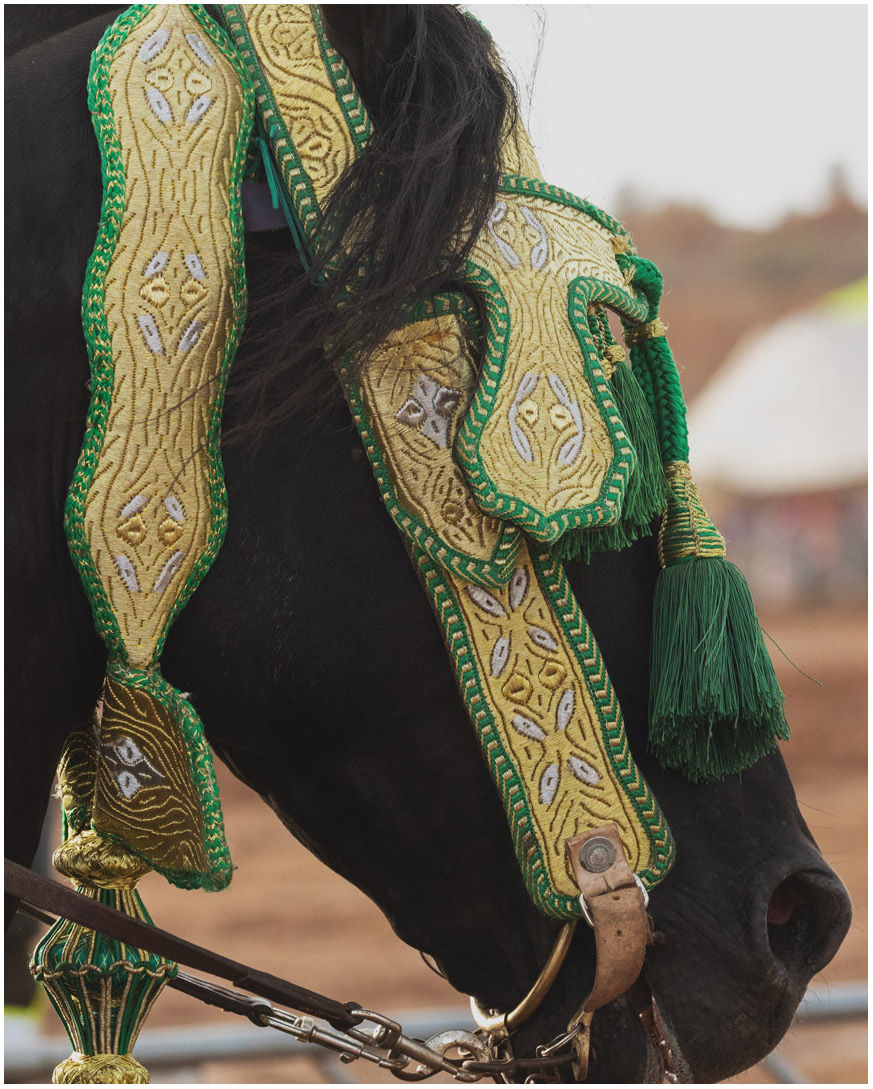
Think of Tboureda as a mix of a cavalry charge, a cultural celebration, and the most synchronized group project you’ve ever seen. A troupe — called a sorba — lines up on horseback, usually 15 to 25 riders across. They’re not just dressed up for fun; every detail has meaning. The turbans, the long tunics, the handcrafted saddles… it’s tradition in motion. Even the horses seem aware of their significance, standing proud and alert, as if they’ve been preparing for this their entire lives.
Tboureda carries centuries of history in its bones. It goes back to the 1500s, when these charges were military drills for Arab-Amazigh warriors. Over time, they shifted from battlefield necessity to cultural ceremony. But the heart of it — the discipline, the pride, the unity — never lost its soul.
On the first official day of the event I grabbed a bottle of water and my cameras, then headed down the street. It was only about 1,000 yards from my apartment but I had set out early to really get a feel for what goes on. I followed the crowd down a dirt road and soon found myself in a world that breathed an energy that had me feeling like a kid at the circus.
This area of Rabat is used for events like this as well as the sheep market in the weeks leading up to the holy days of Eid. It had paved streets complete with curbs as if there was to have been a neighborhood they never finished. Large tents for each group lined these streets in place of the houses once envisioned. This was where they spent their time to eat, rest, and pray.
The very first thing was the smell of horses…and all that comes with it. It reached me before I could focus on anything else. For this Texas boy, it was intoxicating. It reminded me of going to the stock show to see the farm animals when I was little. So, for me and if nothing else, that smell carries nostalgia in the air.
As I strolled along the would-be neighborhood streets, I watched as the riders cared for their four-legged teammates - grooming, feeding, watering. It was really hot out and they took great care in their duties. I admired them for that.
The insides of these massive tents were about as traditional as it could get - rich with Amazigh culture. Large rugs covered an otherwise dirt floor. Places for sitting along the edges and around the low, round tables were designated with sizable, brightly colored pillows.
Just outside, the traditional muskets were stacked in an orderly fashion, leaning on each other at the barrel end to form a conical shape; commonly used in the military today for this reason. These were no ordinary rifles. These were long rifles, perhaps three feet in length - maybe more. The design, the attention to detail - I couldn’t help but stand in awe of the craftsmanship.
I took pictures of everything! And soon found out how much these riders love having their picture taken! The event hadn’t even started and I was already having the time of my life. They also loved sharing stories about their horses and how they themselves got started in Tboureda. Fascinating tales from wonderfully kind people. The hours passed like minutes.
As the temperature began to cool, it was finally time to begin. I left the riders to tend to their business and make my way to the arena to find an optimal spot for capturing the best moments on camera. The event was beginning to take form as the first of many teams gathered to take center stage.
I had never seen people actually ecstatic to be at an event of any kind. This was exciting to say the very least.
As the riders took their places, an energy filled the air. It was palpable. The horses began to get anxious - ready for duty. The anticipation was building. The next moments went as such…
The crowd shifts almost instinctively. People lean forward. Hands go up to shade eyes from the sun. Kids squirm out of their parents’ arms, desperate for a better view. No one has to explain what’s happening — we all feel it.
The silence was thick.
Then....the mighty bellow of the moqaddem, the leader, commands both the attention of the crowd and action of his troupe. Within seconds, I could hear the rumble of sixty or more hooves striking the ground. - When the signal comes, there is no gentle buildup. The line explodes forward. Horses running full speed, giving their all to the absolute and due diligence required of them.
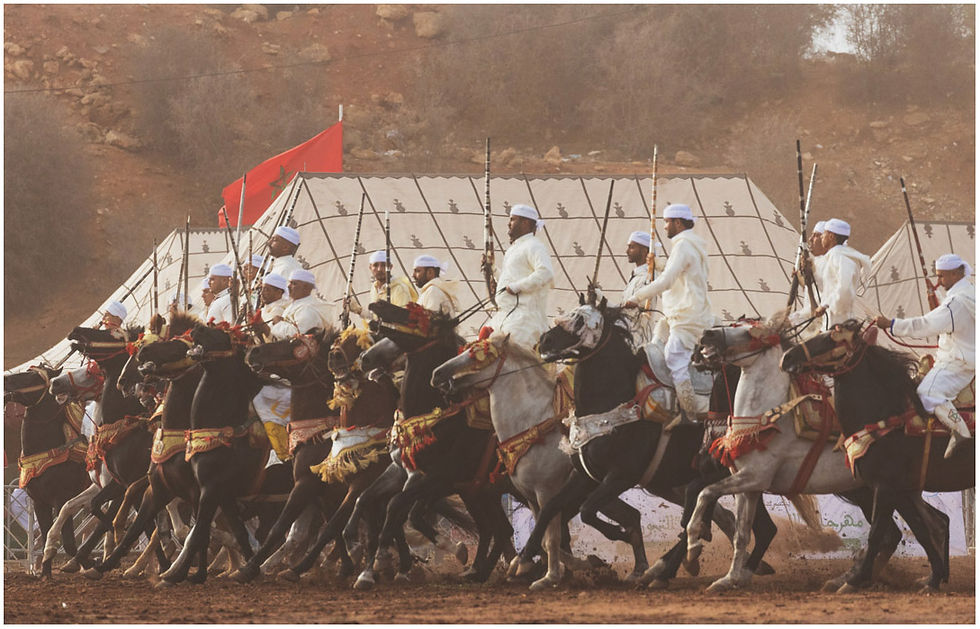
Out on the open field, dust started to rise on its own, as if it already knew it had a role to play. Through the haze emerges a long line of horses, every one of them dressed more elegantly than perhaps I’ve ever been. Embroidered saddles, polished tack, carefully chosen colors — nothing here was accidental. Their riders sat tall, impossibly composed, wrapped in traditional Moroccan clothing that somehow managed to balance refinement and readiness for battle.

The horses surged as one, hooves pounding in a rhythm I could feel in my chest. Dust filled the air, thick and golden, and somewhere beneath it all was the sharp promise of gunpowder that hadn’t yet been fired. Rifles raised in perfect synchronization, each rider matching the next, breath for breath, stride for stride.
And then comes the moment everyone is holding for.
The horses stop hard. Time collapses into a single heartbeat.
Boom!

It’s the sonorous clap of thunder as the rifles discharge orange flames that jut into the air like a fiery sword piercing an enemy and the anticipated smell of gunpowder carried by the massive cloud of white smoke that, for a moment, was the center of our attention. The billowing plume eventually fades, and in a single moment, it’s all over. But it’s at this moment you understand the excitement Moroccans feel watching a piece of their history - their legacy - come to life.
What I found interesting is that much of the anticipation comes from the personal bets we place with ourselves as we collectively wonder if, and hope, they will “get it right”. Because when they “get it right”, meaning the muskets fire in absolute unison — a crack so loud it feels like it rattles something behind your eyes. The crowd erupts in celebration.
When they don’t quite nail it, however, the impact of it all diminishes into what sounds more like a peal of small explosions in a brief fireworks show. There's an immediate and unified reaction, which is a low groan followed by polite, almost apologetic applause. Even the mistakes are communal.
If you ever find yourself in Morocco, and if you’re lucky enough to attend one of these events that will transport you back in time to the battle-hardened days of Morocco, you will have stories of your own to tell that will last a lifetime. That story about the day you met countless people waiting to tell you all about this part of their history and make you feel more welcome than probably any stranger ever has or will. That story about how you felt the ground tremor, the sound of the rifles thumping your chest, and the day you got to witness thunder is waiting for you in Morocco.
A bit of trivia:
In 2021, UNESCO stepped in and Tboureda was officially recognized as an Intangible Cultural Heritage of Humanity — which sounds formal and tidy for something so raw and powerful. But it’s their way of saying this matters. This deserves to endure.
Long before that recognition, though, someone else understood its gravity. In the 19th century, French painter Eugène Delacroix stumbled upon a Tboureda performance and did what artists do when confronted with something overwhelming — he couldn’t stop painting it. Dust, movement, chaos, color. Those paintings introduced Europe to the spectacle, giving it the name “Fantasia”, which, honestly, feels exactly like what a French painter would call it.


Comments